
The thaw ahead
Two winter problems that catch homeowners off guard

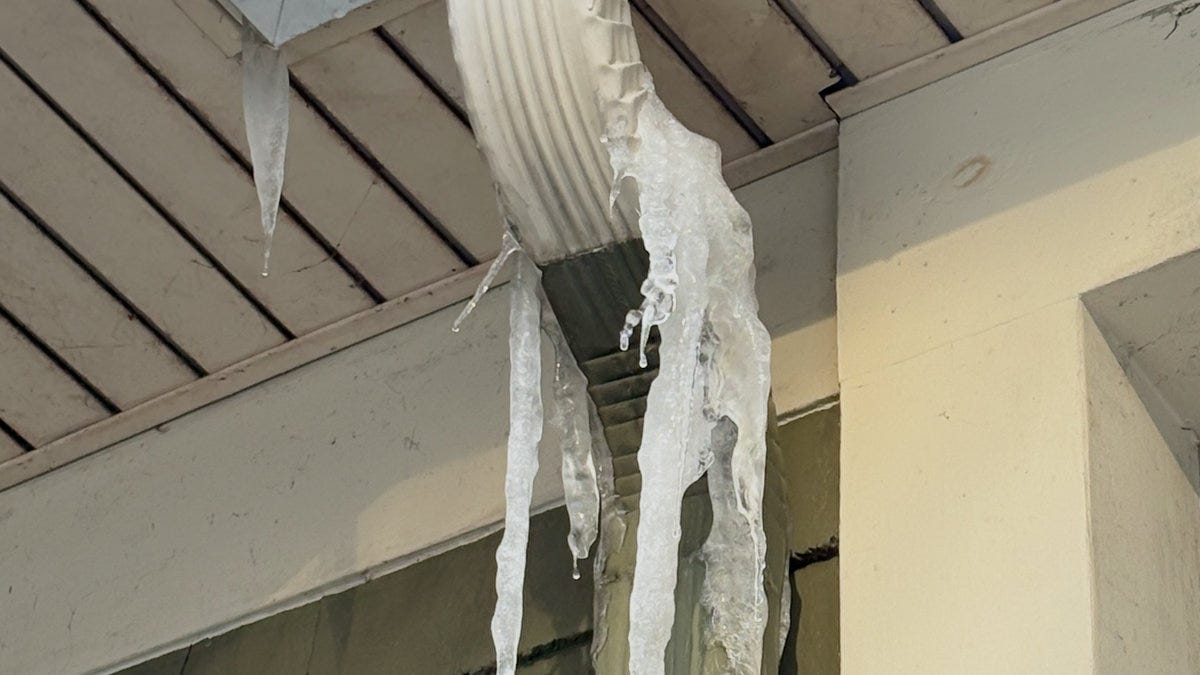
When frozen ground starts to thaw, water behaves in ways that surprise even experienced homeowners — and that’s when problems begin.
The ground in many parts of the country is frozen and covered with snow and ice. Soon, it will start to thaw. When it does, many homeowners experience problems suddenly, and often in places they weren’t expecting.
Let’s look at the two most common trouble spots, and what you can do right now to protect your house.
Basement seepage
As snow and ice melt, water percolates downward — but frozen ground won’t absorb it. Instead, meltwater becomes trapped between the snowpack and the frozen soil below.
In some areas, water may even burst up through the snow, looking like a garden hose spurting up from beneath the surface. This is especially common on sloped lots and around detached houses.
The soil closest to your foundation walls thaws first. But if the ground farther away is still frozen, the water has nowhere to go. The causes basement seepage.
It has been nearly four decades since the Mid-Atlantic experienced such a prolonged deep freeze. The last time this happened, the thaw left thousands of homeowners with wet basements.
What you can do:
If you begin to see seepage, shovel a shallow drainage channel around the house, about three feet out from the foundation. This can help redirect melting snow away from the house instead of toward it.
It’s simple, but it can make a real difference.
Leaking attics
The other common problem during a thaw shows up on the roof.
If an attic is too warm — usually because of inadequate ventilation — heat escaping from the house melts snow on the shingles. That water flows down toward the gutters, which often remain frozen solid.
With nowhere to drain, the water backs up under the shingles and leaks into the attic.
A quick way to limit damage
If water is dripping through the ceiling, poke a small hole where the leak is occurring and place a bucket underneath.
This may sound counterintuitive, but without a drainage point, water will spread across the attic floor and cause far more extensive damage. A small ceiling repair is far easier — and far cheaper — than repairing a soaked attic or a collapsed ceiling.
Coming next
In my next post, I’ll take a closer look at attic ventilation — how it works, how it fails, and what actually matters.
After that, we’ll return to basements and drainage. A preview: very few houses in the Mid-Atlantic — maybe 5% — truly need a sump pump. But every house needs proper gutter and drainage maintenance, sump pump or not.
We’ll talk about how to tell the difference.
For now, stay safe — and take a few simple steps to help your house get through the thaw.
And if you have a question about your house, feel free to reply.
Good morning Jimbo,
My guess is that your windows leak because of incompetent caulking. This happens to many houses. The painting contractor will usually use the caulking gun in such a way that they are not filling up the gap. They are simply bridging the gap. If you look at videos on how to use a caulk gun, it will show you a way that will ensure that you will have leakage.
What I have recommended to a great many former clients is that they wait until spring and then scrape off all of the caulking. I will talk to my contractor as to what is the best brand of caulking for the windows. When you have the caulking tubes what you want to do is pump caulk into the gap until you see a wave of caulk appearing in front of the caulk gun, filling the gap you then move forward and continue to fill the gap. This will be a little bit of a mess, but you can use your finger in a piece of plastic to level out the caulk.
If this doesn't quite make sense, please give me a call.
Best regards,
Jack
Thanks Neighbor for these easy to understand ideas to manage melting snow.